

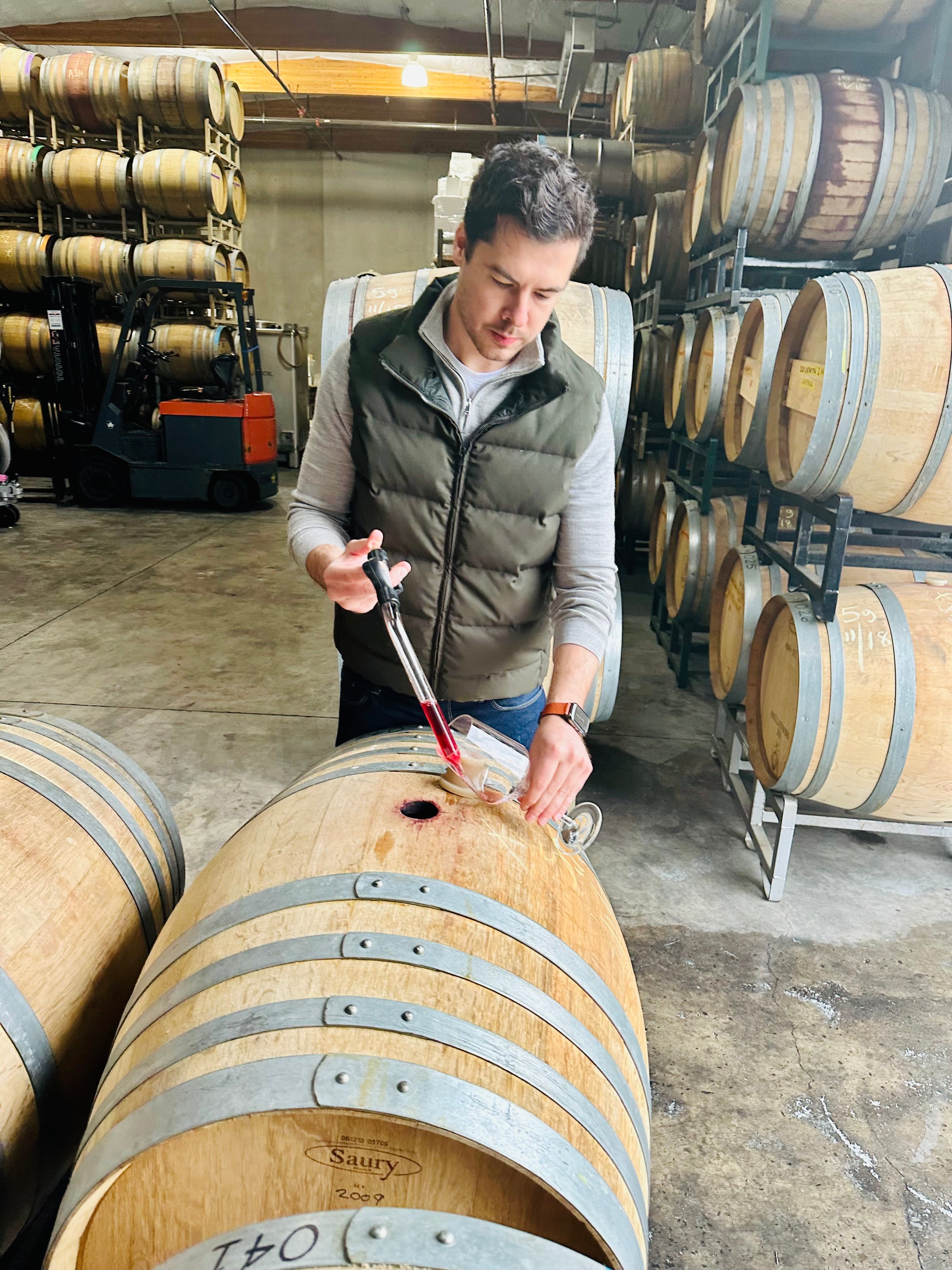
BARREL AGING / ÉLEVAGE
After fermentation, most wines spend anywhere from several months to a a year or two aging, generally in oak barrels. This isn’t just tradition, oak aging makes wine taste better.
The most important thing happening is controlled oxidation. Oak is a porous wood, and very small amounts of oxygen slowly seep in through the staves. Wine also evaporates slowly, so we have to top off barrels regularly (every week or two). Barrel oxidation is completely different from leaving an open glass of wine out overnight, where too much oxygen causes the wine to go stale or even spoil. In a barrel, the exposure is magnitudes less, but it still has a transformative effect on the wine.
In red wines, this slow oxygen exposure helps polymerize tannins, the compounds responsible for wine’s structure and that slightly grippy feeling on your gums. Young tannins can be harsh and astringent. Over time in barrel, they link together into longer, smoother chains, making the wine feel rounder and more complete.
The wine also develops more complex aromatic compounds, shifting from the vivid primary fruit of a young wine toward a more layered, evolved bouquet (sometimes called “secondary” aromas and flavors, age is the “tertiary” layer).
The wood itself can contribute flavors, too. New oak contains compounds including vanillin, lactones, and various phenols that are extracted into the wine over time, adding notes of vanilla, toast, baking spice, and sometimes coconut depending on how the barrel was toasted during construction and whether it’s French or American oak.
Why Neutral Oak and Stainless Steel?
At VOON, we have always used neutral (barrels that have been used multiple times already) French Oak barrels to minimize the impact of the oak on the wine, and just get the other benefits of aging like oxidation and completing a secondary fermentations (malolactic fermentation).
Spoiler: Although for the first time ever, soon we will be introducing a new wine we used a stunning new French Oak barrel from Burgundy for!
We generally like neutral barrels because new oak can be too powerful. For a full-bodied Napa Cabernet Sauvignon with big tannins and concentrated fruit, a year or more in new French oak can be exactly what the wine needs. But for a delicate Sta. Rita Hills Grüner Veltliner or Chardonnay, oak influence can overwhelm the freshness and elegance we love.
We aged our Grüner Veltliner in neutral oak, and then our Malvasia Biana in both neutral oak and stainless steel. Stainless steel tanks are airtight, with no oxygen ingress. Wine aged in stainless stays tighter, crisper, and more focused. The fruit is vivid. The acidity is alive. This helps the Malvasia contrast with our Grüner.
For the Malvasia, the combination of stainless steel and neutral oak gives us exactly what we’re after: texture and complexity from the barrel, freshness and clarity from the tank.
And now, they’re in the bottle.
Read more
WHAT IS NATURAL WINE, ANYWAYS? The term “natural” is bandied about widely in the wine world. From our experience, natural wine has quite a spectrum, sometimes electrically delicious, sometimes with...
In a first of its kind, this month’s sip will focus on the history of a grape varietal dear to our hearts: Grüner Veltliner (pronounced "Groo - Ner Velt - Leaner"). Spoiler alert: A scandal in the...